Assignment 1
Our first assignment this week tells us to: «Pick three events in the timeline from this week’s lesson History of Photography: An Introduction, and find photographs of the event on the Internet or in the library and write a paragraph explaining the event in more detail. Include your photographs in the description.» In the lesson we have learned about several interesting events, and it were difficult to make a choice, I have decided to go with these:
The Camera Obscura
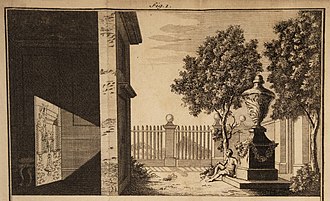
The natural optical phenomenon called Camera Obscura, is when an image of a scene, gets projected through a small pinhole in a screen or wall, and appear completely reversed and inverted on a surface opposite from the tiny hole. Around 330 BC, the greek philosopher Aristotle used a rough version of the pinhole camera during a partial solar eclipse, but the first one to theorize about this concept, was Mo-Ti, a chinese philosopher in 400 BC. The pinhole camera effect was thoroughly studied by the Arab physicist Ibn al-Haytham in the 11th century. His work on this effect, even if he was not the one to discover it, became highly influental all over Europe. Leonardo Da Vinci was also involved with this effect, and he defined the Camera Obscura as a device designed to reproduce linear perspective.
Ps. Did you know Camera Obscura is latin for dark room?
The invention of Daguerrotype
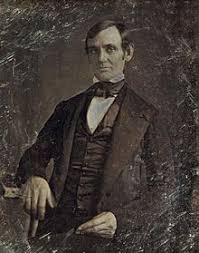
Daguerreotype is the name of a photographic process, named after Louis Jaques Mandé Daguerre, the french artist who invented the technique. He worked together with Joseph Nicéphore Niépce to develop a method to permanently capture the images given by a camera obscura. Unfortunately Niépce passed away, but Daguerre kept experimenting, and succeeded, announcing his work to the public in january 1839. He found a way using silver-plated sheets of copper, along with several different chemicals. In august 1839, the details on this new process were presented to the public as a gift to the world from France.
The Ambrotype
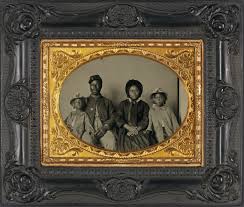
Once upon a time Sir John Herschel made an observation that if under exposed negatives are put in front of a black background, it will appear positive. This inspired the invention of the ambrotype.
In 1850 the english sculptor Frederich Archer invented a new way to process the development of pictures. The result of this wet-plate collodion process is known as ambrotype. To make a ambrotype, you treat a glass plate with a clear syrup-like liquid, and then immersing the plate in a silver-nitrate bath. The glass plate was then put inside the camera and exposed to sunlight. When the positive image is finished, the dark background will make the highlights, shadows and details in the photo appear.
Assignment 2
For our second assignment, we were asked to choose one technique from this weeks lessons, do additional research and write a report on why this technique have contributed to what we can do today with photography.
The invention of film roll, made by George Eastman

When I was I child my very first camera was a Kodak camera, after a couple of disposable cameras, I saved up my birthday money, and bought myself a camera. And although it was nothing like the cameras today, oh boy! It was simply magic! Standing there at the store, being handed the envelope with your own photos, and then flipping through them to see how many thumbs, unclear shots and closed eyes you actually had managed to catch this time. I think we all grew up hearing about a Kodak moment, even though we did not speak english at that time, it was for everyone, simply everyday magic. And this fast and easy development process was possible, thanks to one little thing: The film roll, invented by George Eastman (1854-1932.)
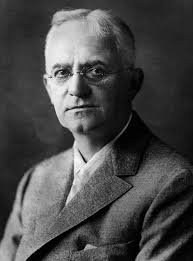
The first Kodak camera was introduced in 1888. The camera was just a box, preloaded with a film roll for 100 pictures. When the roll were full of memories and photos, the customer could send it back to the factory. In return, they got a new roll of film in their camera, and developed pictures. It became much easier for more people to gain access to a camera, without being professional photographs or wealthy. The process of taking pictures, replacing the film and developing them, was so fast and easy, that the Eastman Kodak company had their own slogan about it: “You press the button we do the rest”.

In 1889 he introduced a transparent based film roll, that since have remained as the standard for film rolls.
Bringing the ability to take photos and capturing images of memories to more and more people, and people seemed to love it. They took pictures documenting all the memorable situations and occations. Could you imagine getting married or greeting your first born grandchild without the possibility to take photos?
Giving the opportunity of owning an camera to more people, is in my eyes the start for the diversity in photography we have today. If only trained photographers or very wealthy people would have access to it, we would not be blessed with all the input and possibilities we can find today.
Even if we now mostly have moved on from analogue cameras to digital cameras and cell phones, I think we would not be where we are today if the film roll had not expanded the availability and time it took developing, for everyone.
Today photography is often reviewed as fine art, and it is really difficult to imagine a world without the possibility to take snapshots of everything you love and want to remember.
Speaking of opportunities of having a camera, the studies this week has made me think about my old cameras, I probably have to go for a treasure hunt in the attic sometime in the future. If I am lucky my old cameras still work. And in the meantime, I can wait in excitement for the development of the first disposable camera used by my five year old. Just a couple of days, and we can again count thumbs, unclear shots and closed eyes. And possibly having sparked the joy of photography, I may also have to buy a roll of film in the near future.
 Trubadilje