«In this assignment, you will be given the opportunity to also test your idea sketching skills. It is important to start working with basic ideas on paper and develop your concept from there on out.
- On an A4 landscape page, draw four equal squares. Create 4 more pages in this way. So, you’ll have 5 pages with four squares on each.
- Draw one or two squares or rectangles in each empty square to achieve the following visual effects. You can work with the interaction of rectangles and squares to make the balance or imbalance more evident.
- Entering left
- Movement to the right
- Movement to the left
- Movement downwards
- Movement upwards
- Balance
- Tension
- Symmetry/asymmetry
Produce at least two different versions of each effect, recording your results each time. Explain in one or two sentences what you wanted to achieve.»
For this assignment I chose to work with squares and rectangles separate, here are my attempts:
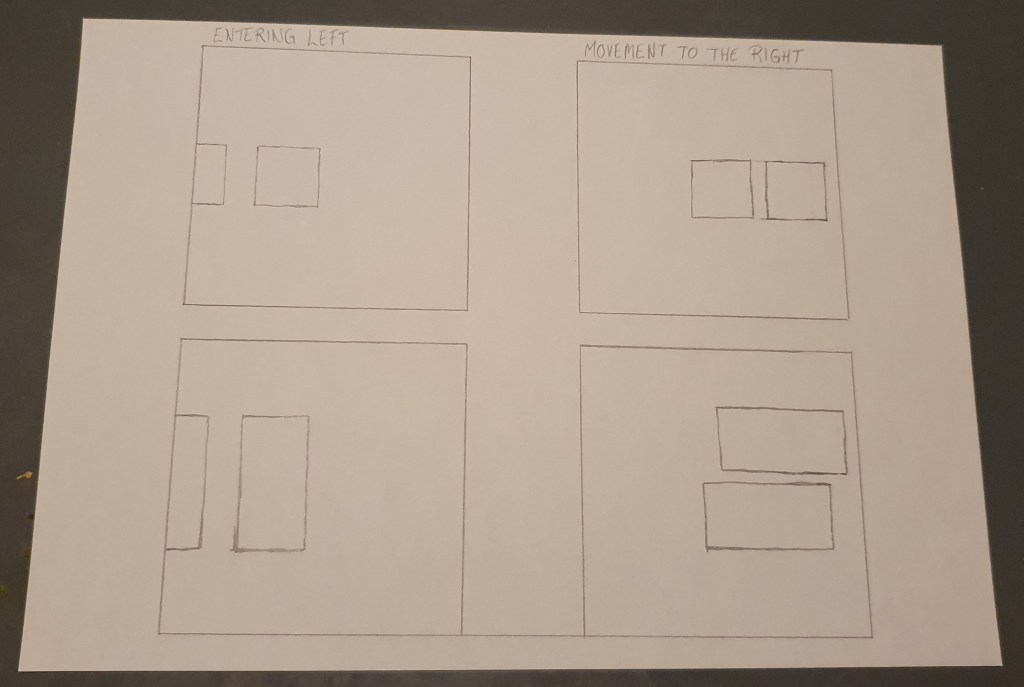
Entering left: Here I tried to make it look like my squares and rectangles is on their way into the paper. The last one is just halfway there.
Movement to the right: I tried to make it look like my squares and rectangles is sliding towards the right edge, by placing them near the right side of the paper.
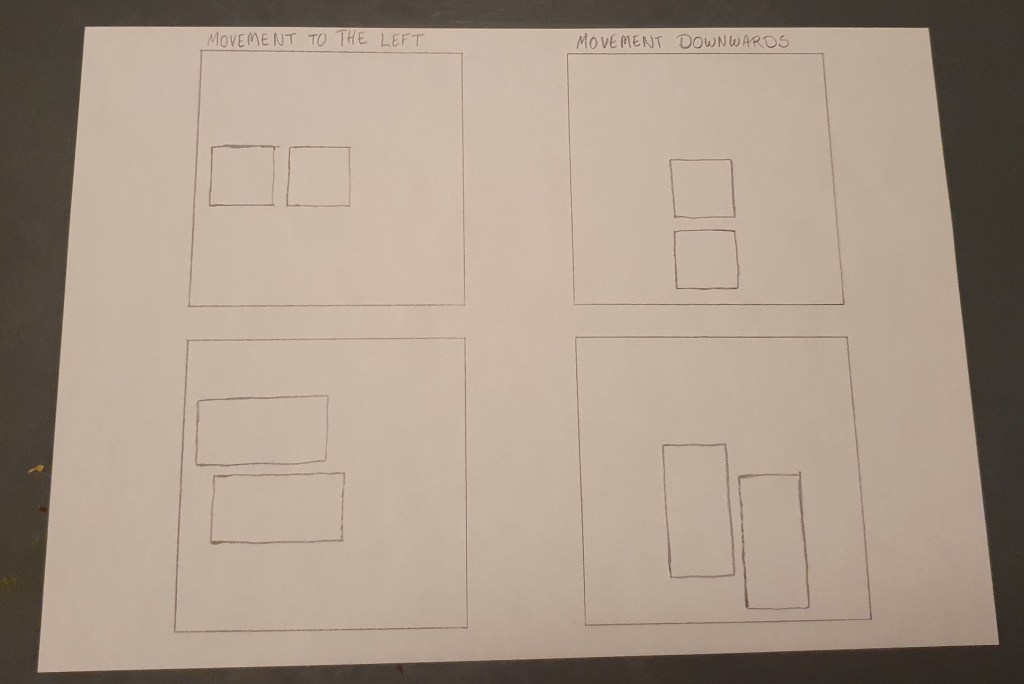
Movement to the left: On this effect I tried to make it look like my squares and rectangles is making their way towards the left edge, by placing them near the left side of the paper.
Movement downwards: I tried to make it look like my squares and rectangles is almost falling towards the lower edge, by placing them near the bottom.
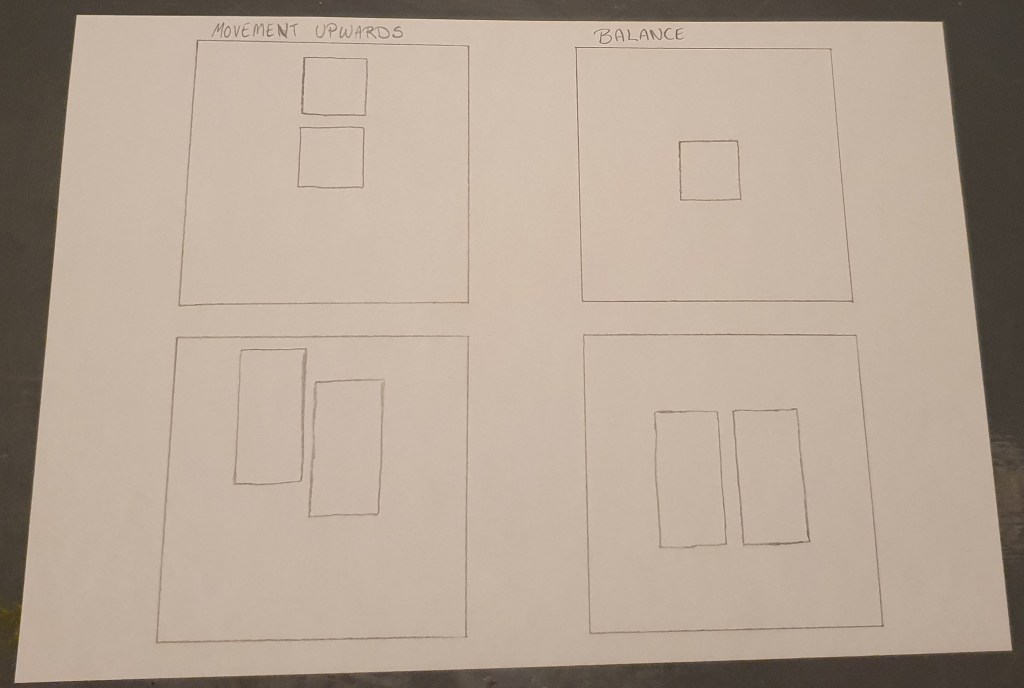
Movement upwards: Here I tried to make it look like my squares and rectangles is working their way up on the paper, by placing them near the upper edge.
Balance: In this I wanted to create balance. The square one is a single square in the middle of the frame. On the rectangle one, I used two rectangles placed in the middle, mirroring each other.
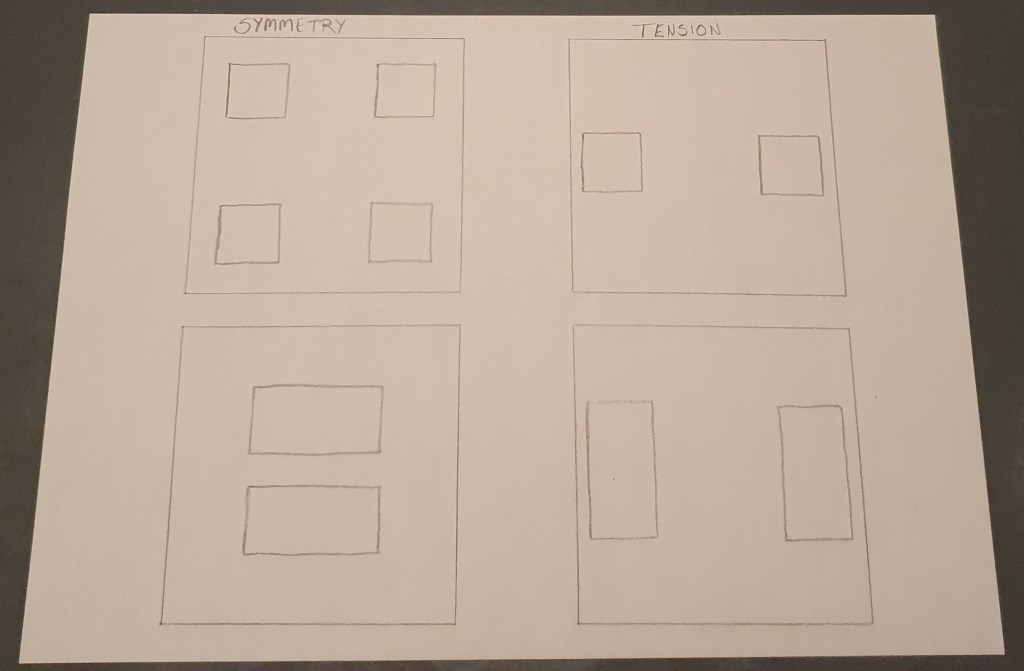
Symmetry: In this one I placed the squares and rectangles like the eyes on a dice and as an equals sign, to create symmetry and balance.
Tension: Here I placed my squares and rectangles at the edges of the paper, opposite of each other. Trying to make a conflict on where to rest the eye, and create tension.
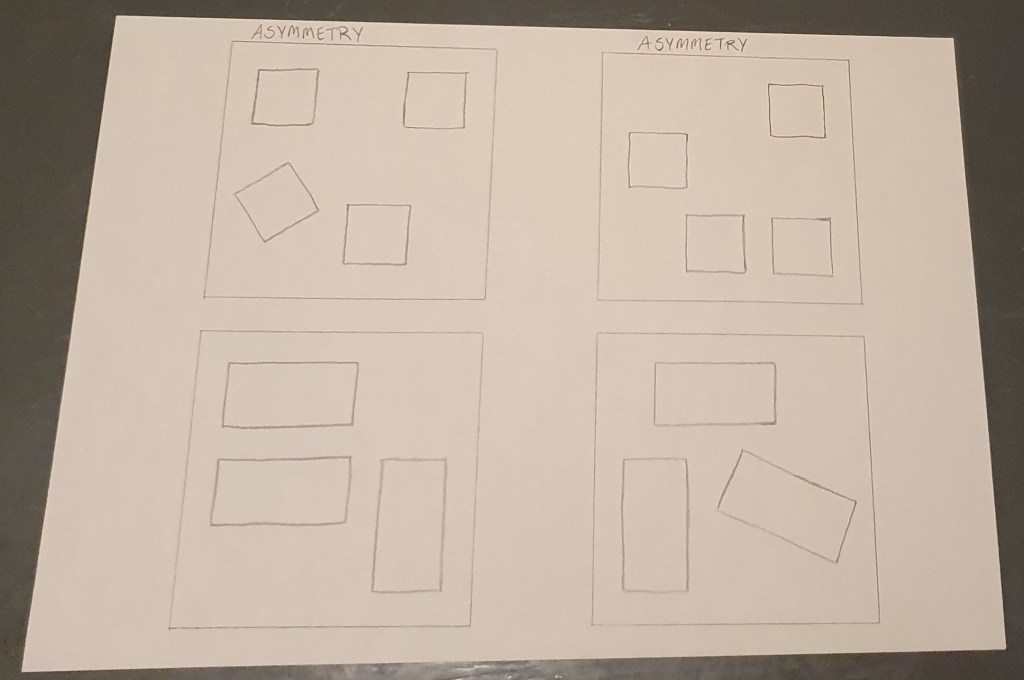
Asymmetry: Here I played around with the squares and rectangles, making different kinds of combinations. Without making them messy and unpleasing to look at.
 Trubadilje